
Picture this. You've spent hours in the kitchen. The table is set, friends are arriving. You're proud of the menu. Then someone sits down, looks at the main course, and says: "Oh... I can't eat mushrooms, I'm allergic." Or, they don't say anything, but you can tell they're just pushing food around the plate because it's something they really don't like.
That sinking feeling, the scramble to improvise, the guilt of not remembering something that matters about someone you care about.
This happened to me, more than once. And it's the spark that led me to build Beloved.
From Apple Notes to an actual app
I'm someone who loves hosting. Welcoming people at home, cooking for them, making them feel at ease. That's my thing. So naturally, I started taking notes. In Apple's Contacts app, I'd jot down food preferences, allergies, little details. But it was messy, limited, and scattered.
I wanted more. I wanted to know birthdays, to remember the last time I saw someone, to recall a friend's kid's name without hesitating
At the same time, I've spent the last three years working on a clienteling project professionally. Clienteling is all about knowing your customers deeply and building genuine relationships with them. I realized the same principles apply to personal life, and I wanted a tool that brought that mindset home.
So I decided to build it myself.
The catch: I had never written a line of Swift
Here's the thing. I'm a front-end developer, mainly working with web technologies. I had zero experience with Swift, SwiftUI, or any of Apple's frameworks. What I did have was Claude Code running inside Xcode.
And that changed everything. I could describe what I wanted in plain language, iterate on ideas in real time, and learn Swift along the way. Claude Code became my pair programmer. Within a few hours, I had a working app, not a prototype, an actual app running on my phone.
It's a strange feeling, going from "I don't know how to do this" to "I built this" in such a short time. AI-assisted development didn't replace the thinking or the decisions. I still had to design the experience, choose the right trade-offs, and care about the details. But it removed the barrier of not knowing the language.
What Beloved actually does
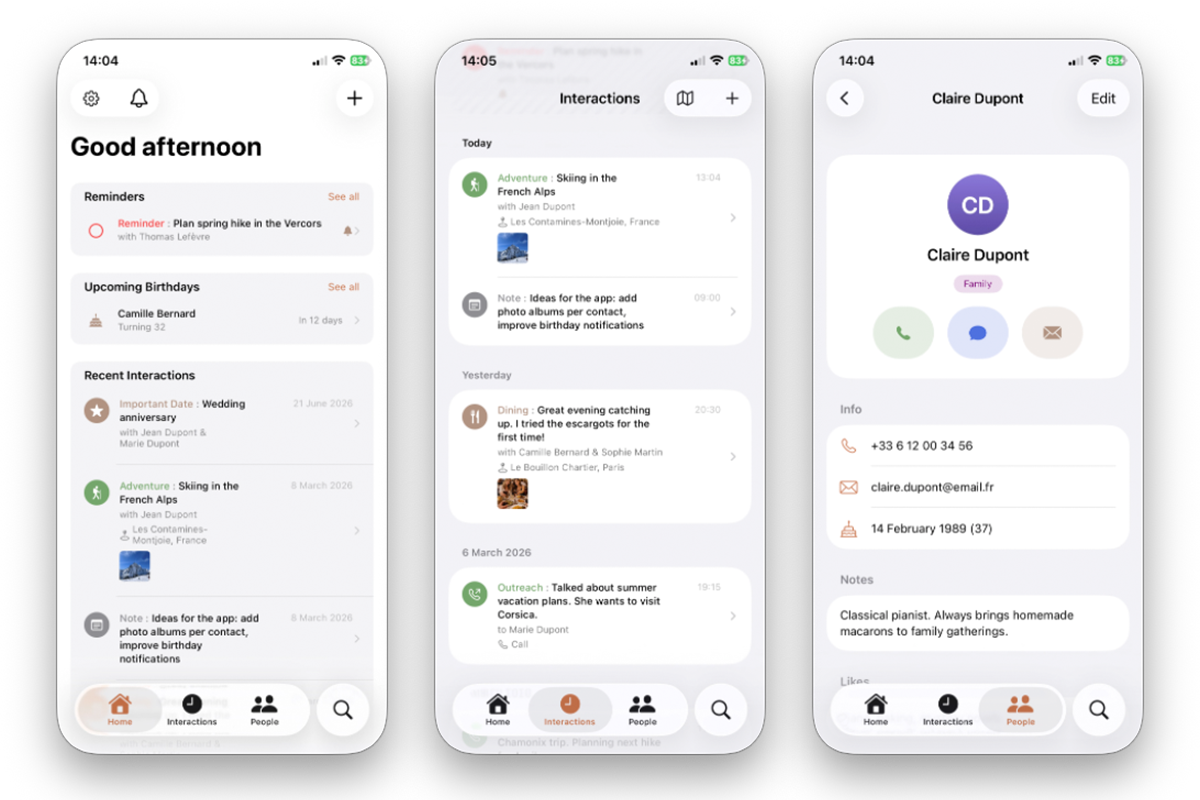
At its core, Beloved helps you remember the people you love, and show it.
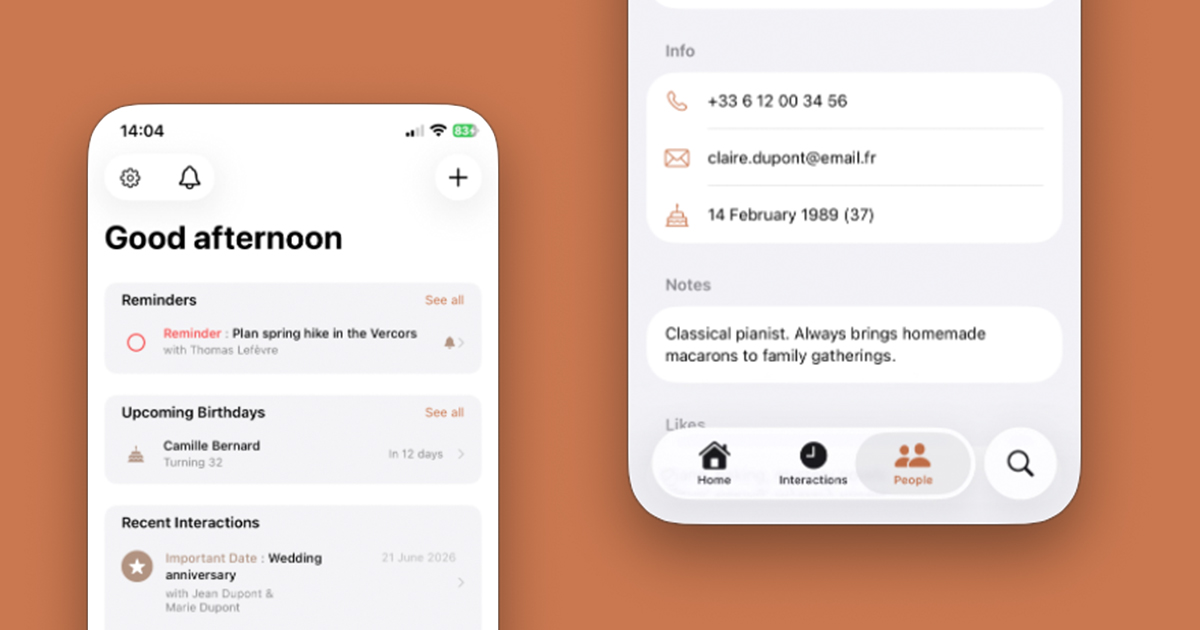
You can store contacts with all the details that matter: birthdays, allergies, likes, dislikes, pets, notes, the kind of relationship you have with them. Then you log interactions. Dinners, phone calls, trips, little moments, with photos, locations, and the people who were there.
You can set gentle reminders to catch up with someone, you get notified about upcoming birthdays. And there's a powerful search engine that lets you find anything in real time. "When was the last time I saw Marie?" or "Where did we go for Tom's birthday last year?"
Everything is organized, searchable, and personal.
Privacy first: everything stays on my phone
This was non-negotiable for me. Beloved stores everything locally on my iPhone. No cloud. No server. No account to create. Personal data about the people I love stays exactly where it should, with me, on my device.
In a world where every app wants to sync your data to some server, I find comfort in knowing this information lives nowhere else.
Then I got curious and started exploring
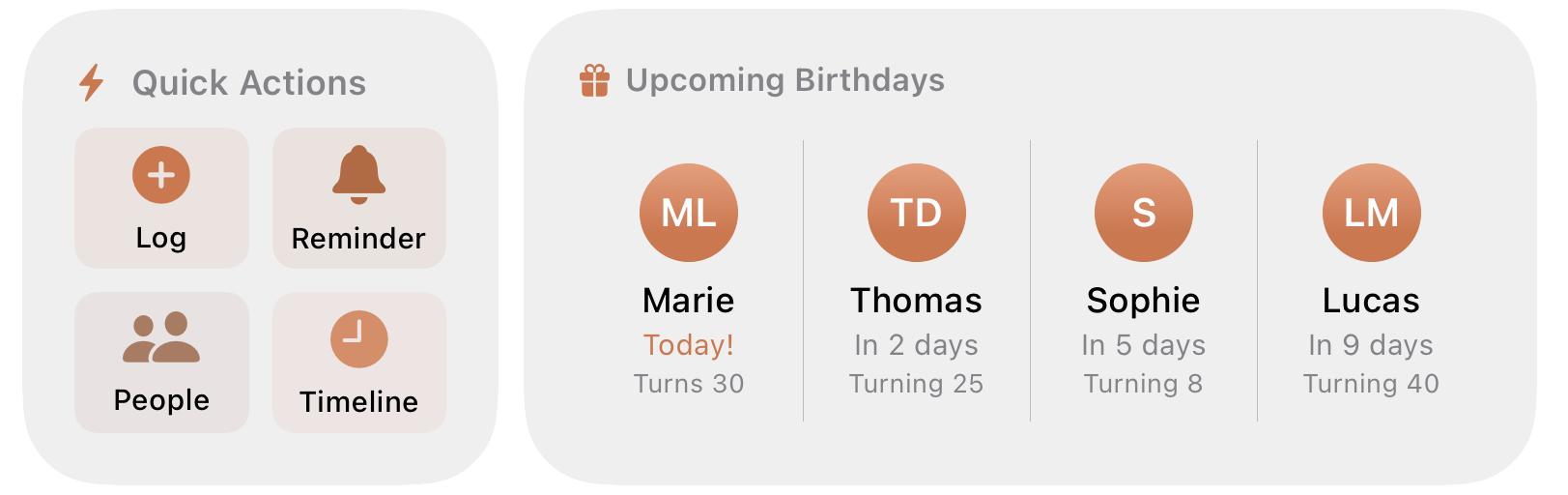
Once the core app was working, I couldn't stop. I wanted to push further, try new things, see what Apple's platform could do.
So I added widgets. Four of them. A birthday widget that shows upcoming celebrations, a reminders widget, quick actions to access quickly to actions within the app. And my favorite: a Memories widget that displays a random photo from your past interactions right on your home screen.
I also implemented push notifications for birthdays and reminders, the app gently nudges you when someone's birthday is coming up or when it's time to catch up with someone. No nagging, just a quiet tap on the shoulder at the right moment.
None of this was planned, it was just the joy of building something and wondering "what if I tried this next?"
What I learned
This project taught/confirmed me a few things.
You don't need to be an expert to build something meaningful. With the right tools, and Claude Code was genuinely transformative here, the gap between "I have an idea" and "I have an app" has never been smaller. I went from zero Swift knowledge to a full-featured iOS app with widgets, notifications, and a real search engine. That said, it doesn't mean you can vibe code your way through everything. Sometimes the result is messy, you need to deep dive into the code yourself, understand what's happening, and fix things. There can be security issues or design flaws that AI won't catch for you. The tool accelerates you, but it doesn't replace your judgment.
The best side projects come from real frustrations. Every feature in Beloved exists because I actually needed it. The allergy tracking, the interaction history, the birthday reminders. They're not features I imagined a user might want. They're things I wished I had every time I hosted a dinner.
Privacy can be a feature, not a limitation. Not syncing to the cloud wasn't a compromise. It was a deliberate choice that made the app simpler, faster, and more trustworthy.
Beloved will not be published on the App Store. It's a personal project, built on my own time, for my own use and I'm proud of that.
All data display are mocked, the storytelling is lightly fictionalized but based on a real story.
